The concept of sustainability has ceased being a trend in the current beauty industry and is now a central objective of operations. Nevertheless, the problem of cosmetic packaging recycling is still relevant. Among all the beauty packaging produced around the world every year, approximately nine percent of the total is recycled. This is a worrying statistic, and there is a great need to find some solutions that will ensure the packaging is appealing as well as environmentally friendly. Manufacturers should know that mono material packaging is one of the strategies now gaining momentum in Australia and is likely to revolutionize the lifecycle of beauty containers, pumps, and bottles.
Mixed-Material Packaging Recycling Dilemma
The conventional cosmetic containers usually use a combination of various materials that are bonded. Metals and plastics can be mixed with pumps, and polypropylene (PP), polyethylene terephthalate (PET), and other polymers can be mixed with coatings, labels, and so on. Although these composites are durable and pleasing to the eye, they are very tough to recycle.
The recycling facilities find it difficult to sort these materials. The bonded components and mixed layers make the packaging non-recyclable or induce it to go to a landfill. As a result, brands with strong environmental policies cannot go beyond meaningful circularity. This is both an operational and reputational challenge to Australian beauty companies that are aiming to attain sustainability.
Learning About Mono-Material Packaging
The solution to this comes in mono-material packaging, where the entire component is made of one polymer. As an example, bottles, pumps, and caps may be fully fabricated with the use of PP or PET, which makes the process of their recycling much easier. The containers can fit into the current recycling streams by removing mixed-material assemblies, such that post-consumer waste can be efficiently recycled.
Besides being recyclable, mono-material packaging is also in line with the principles of a circular economy. Post-consumer recycled (PCR) resins can be used to produce brands without affecting the integrity or aesthetic quality of the products. This will not only lessen the use of virgin plastics but also send a message of a brand concerned with a solution in a way that is seen by the consumer.
Advantages of Mono-Material Packaging
The environmental benefit of single-material solutions is obvious. Recycling easiness decreases landfill waste, reduces carbon footprint, and increases the material recovery rates. In the case of Australian beauty brands willing to act sustainably, this is one of the quantifiable methods of making a contribution towards national environmental objectives.
Moreover, through the use of PCR content in packaging, organizations reduce the need to produce virgin plastic, which further reduces the impact on the environment. Mono-material designs are, therefore, a responsible decision and a competitive advantage in the competitive beauty market.
Australian Beauty Brands: Benefits
Mono-material packaging has several advantages for Australian beauty brands. To start with, it facilitates simpler recycling. In case of discarding bottles, jars, or lotion pumps, chances of a successful recycling process are almost guaranteed if the packaging is made of one material. This has a direct impact on sustainability and corporate responsibility reporting.
The other major advantage is adherence to environmental laws and voluntary sustainability practices. Australia has much stricter rules on the reduction of plastic waste and the extended producer responsibility. To fulfill these requirements, mono-material packaging combats these goals through its fully recyclable solutions that align with the goals of the circular economy.
Addressing Design Concerns
One of the major fears of mono-material packaging is that it constrains creativity or design freedom. Practically, manufacturers will have the ability to provide a large variety of customization features and still be recycled. Silk screen printing, embossing, debossing, and matte finishes can be used to customize surface finishes, colors, and textures to specifications that apply to a brand. Even though some techniques, such as electroplating, are not always applicable when it comes to the mono-material design based on the sustainability factor, the range of solutions in place makes sure that the aesthetic purposes are not compromised.
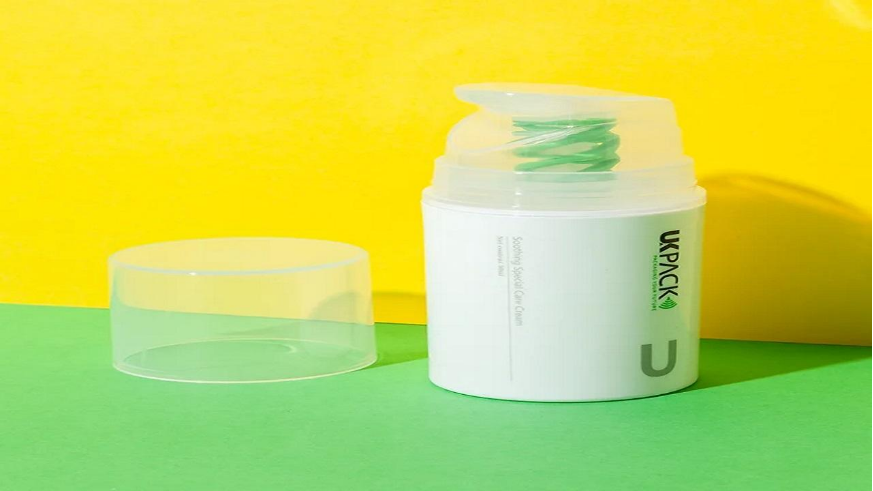
Innovation in Mono-Material Solutions
Mono-material packaging provides an opportunity to develop a personal mold, which means that brands have the right to design unique shapes and practical elements. The joint design activities will also guarantee that the solutions applied to the packaging fulfill both the technical expectations of recyclability and the aesthetic goals of the consumers.
Through their collaboration with manufacturers, the brands are able to obtain the packaging that is aesthetically unique, ergonomically viable, and completely recyclable. The ability eliminates the historic trade-off between environmental responsibility and design innovation.
UKPACK: Developing Sustainable Packaging
UKPACK has become a leader in mono-material packaging solutions for the beauty brand worldwide. With the use of high-quality PP plastics provided by the reliable suppliers, it manufactures a line of recyclable containers, such as airless bottles, lotion pumps, cosmetic jars, and deodorant sticks.
UKPACK makes mono-material packaging not only safe and meet the required regulatory requirements, but also of a high standard when applied in everyday life. These polymers are compliant with the FDA and EU standards, which means that they can be used in international cosmetic requirements.
Prospects of the Beauty Market
The focus will be on mono-material packaging since the beauty industry in Australia is currently implementing sustainability to embrace new products. It will fix ancient issues regarding recycling, will work on the values of a circular economy, and will allow brands to maintain the quality of products at a high level. Mono-material solution is a strategic and ethical choice to make for companies that anticipate keeping up with the demands of environmentally conscious people.
The partnership with manufacturers like the UKPACK offers Australian brands a chance to obtain recyclable high-performance packaging, which meets both practical and aesthetic requirements. By implementing mono-material designs, the beauty industry companies will be free to reduce the harm to the environment, maximize the chances to gain the trust of consumers, and lead the way in sustainability.
Conclusion
In a world where consumers are becoming more conscious of environmentally friendly decisions, mono-material packaging is a clear way forward. Not only is it a technical solution, it is a design philosophy with recyclability, quality, and brand integrity as its core principles. In the case of the Australian beauty brands that value the environment, mono-material packaging is no longer an option but a necessity.